
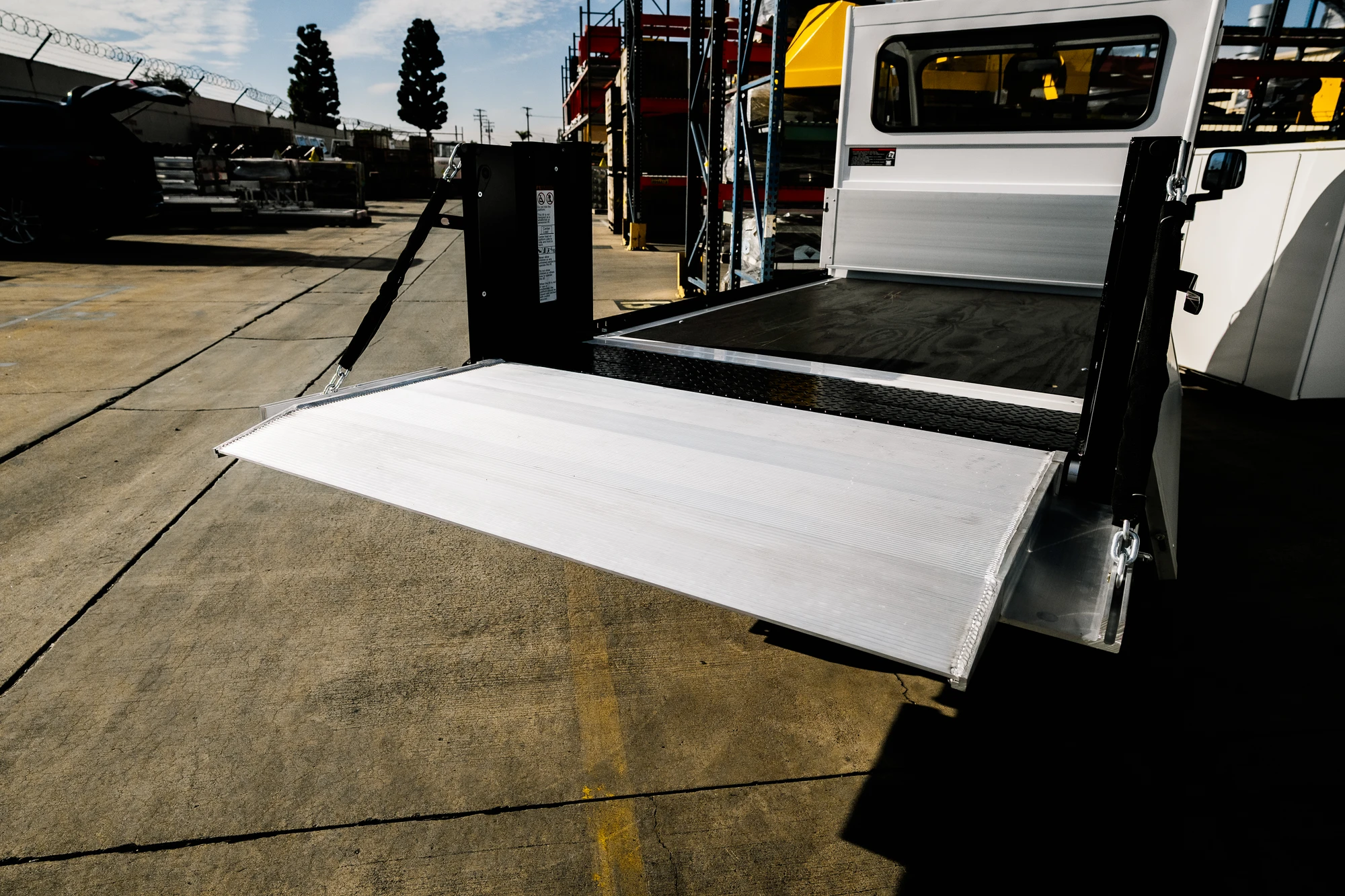
One operator. One vehicle. Altogether, ground‑to‑deck cargo handling that maximizes workforce and fleet efficiency without the cost and size of a full‑size truck.
The Bigfoot XL Industrial Liftgate Truck delivers the capability of a full‑size commercial truck in a more compact, maneuverable, all‑electric platform. Waev factory‑integrated a Tommy Gate G2 Series hydraulic liftgate directly into the proven Bigfoot XL chassis — creating a single, seamless solution for campuses, municipalities, airports, ports and industrial facilities.
Unlike aftermarket add‑ons, every system — electrical, mechanical and chassis — is engineered to operate as one cohesive unit. As a result, the solution provides reliable, repeatable cargo handling that one operator can execute safely and efficiently, with less manual lifting and less equipment on site.
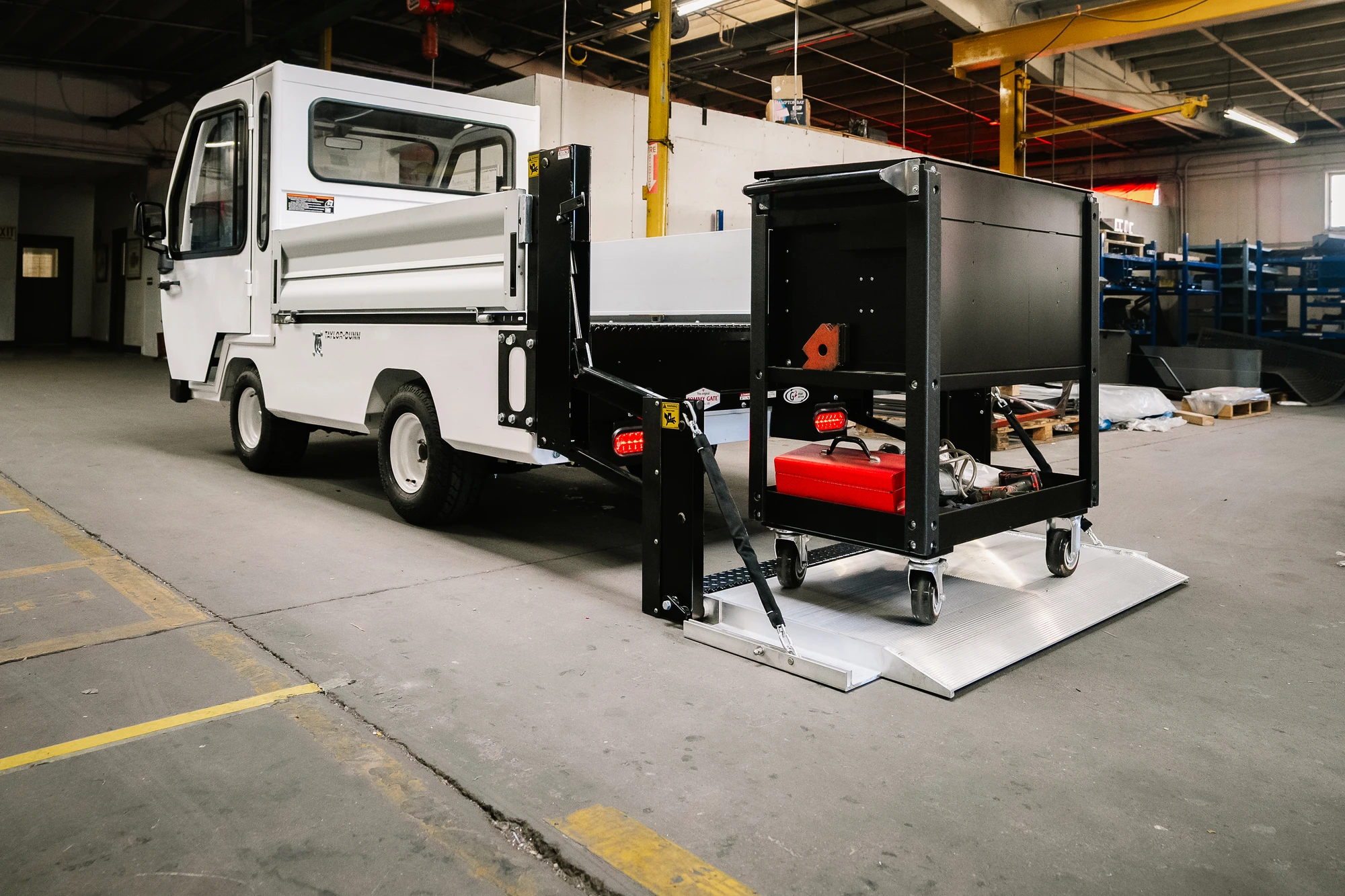
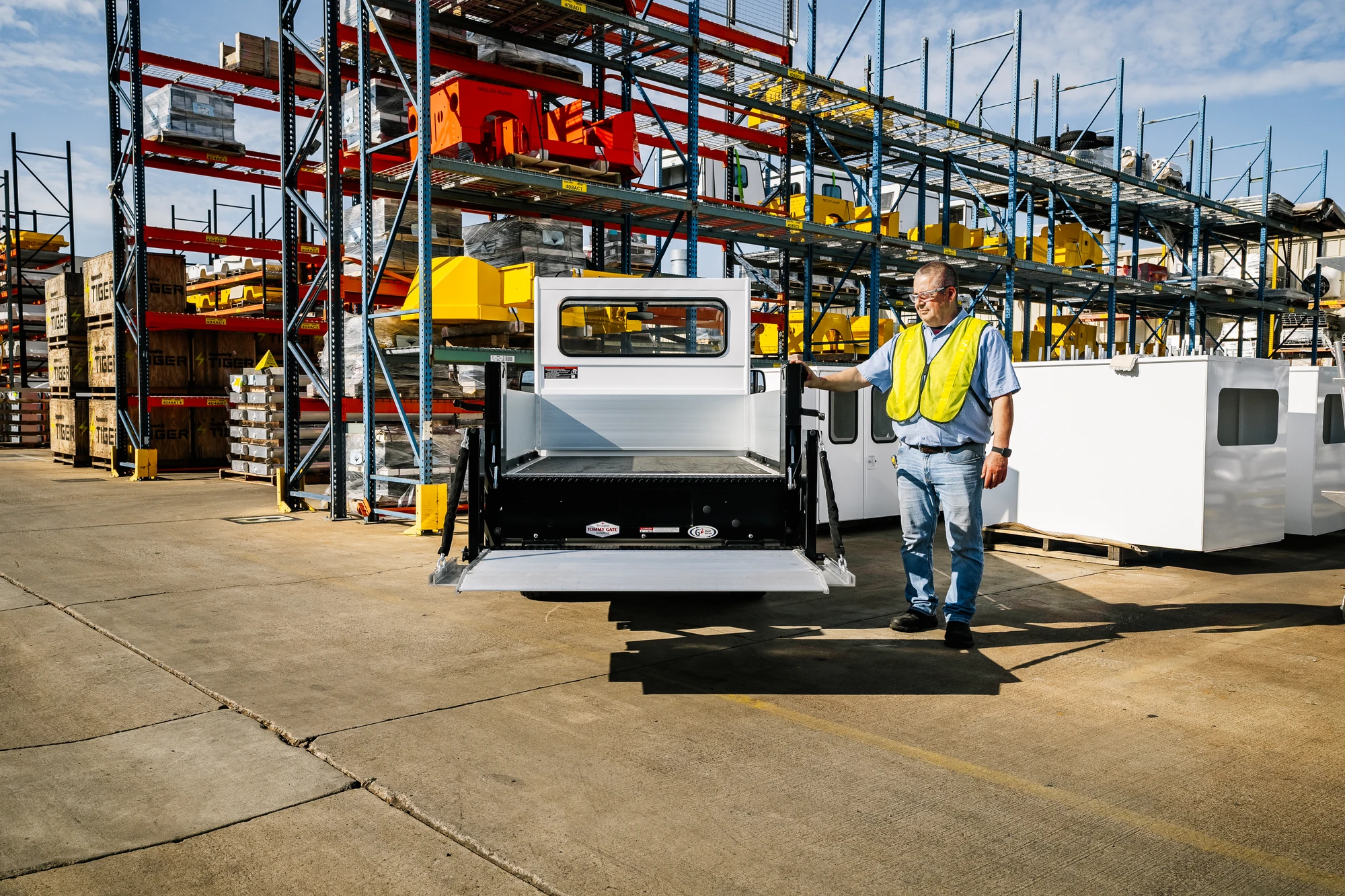
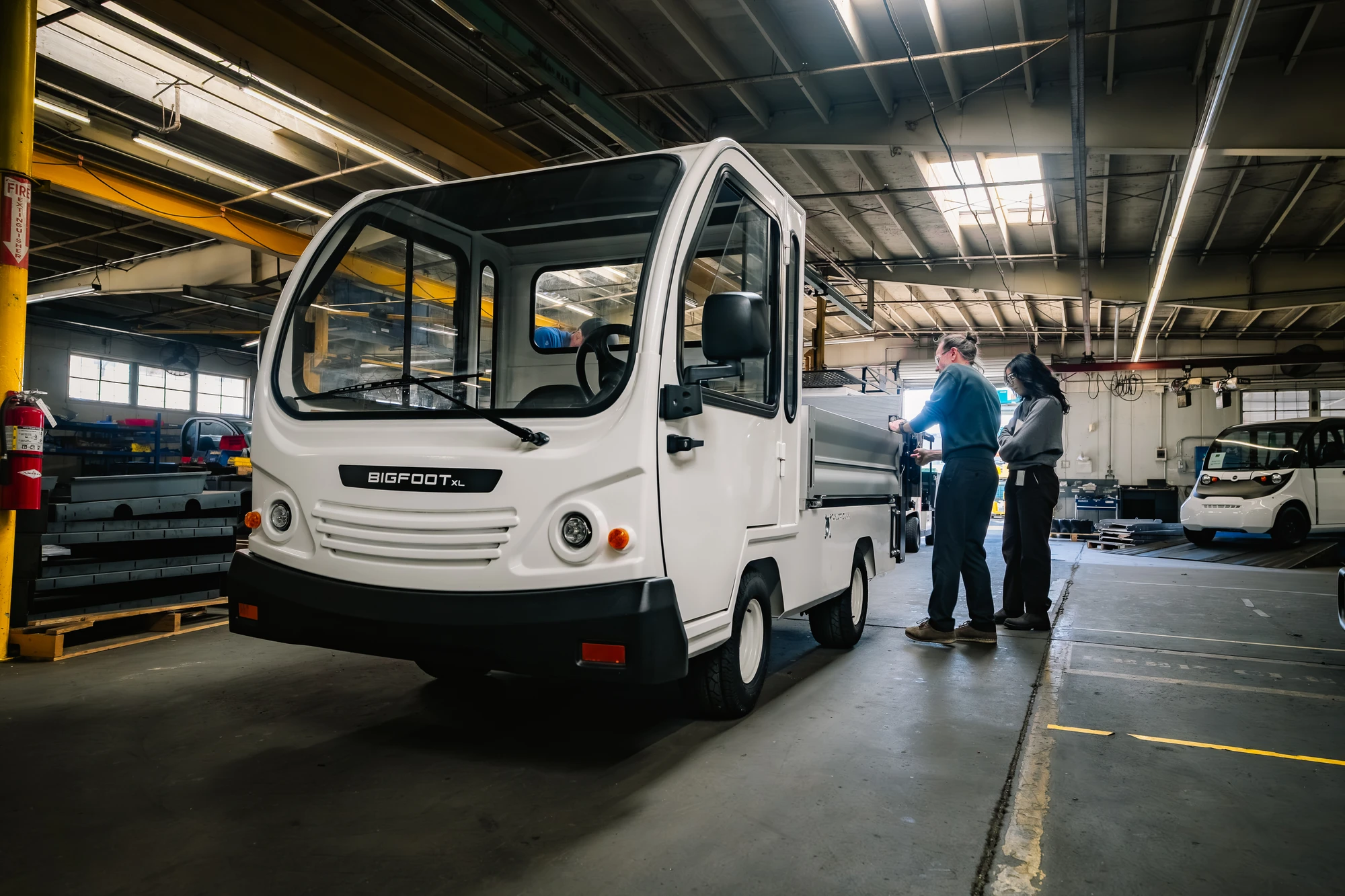
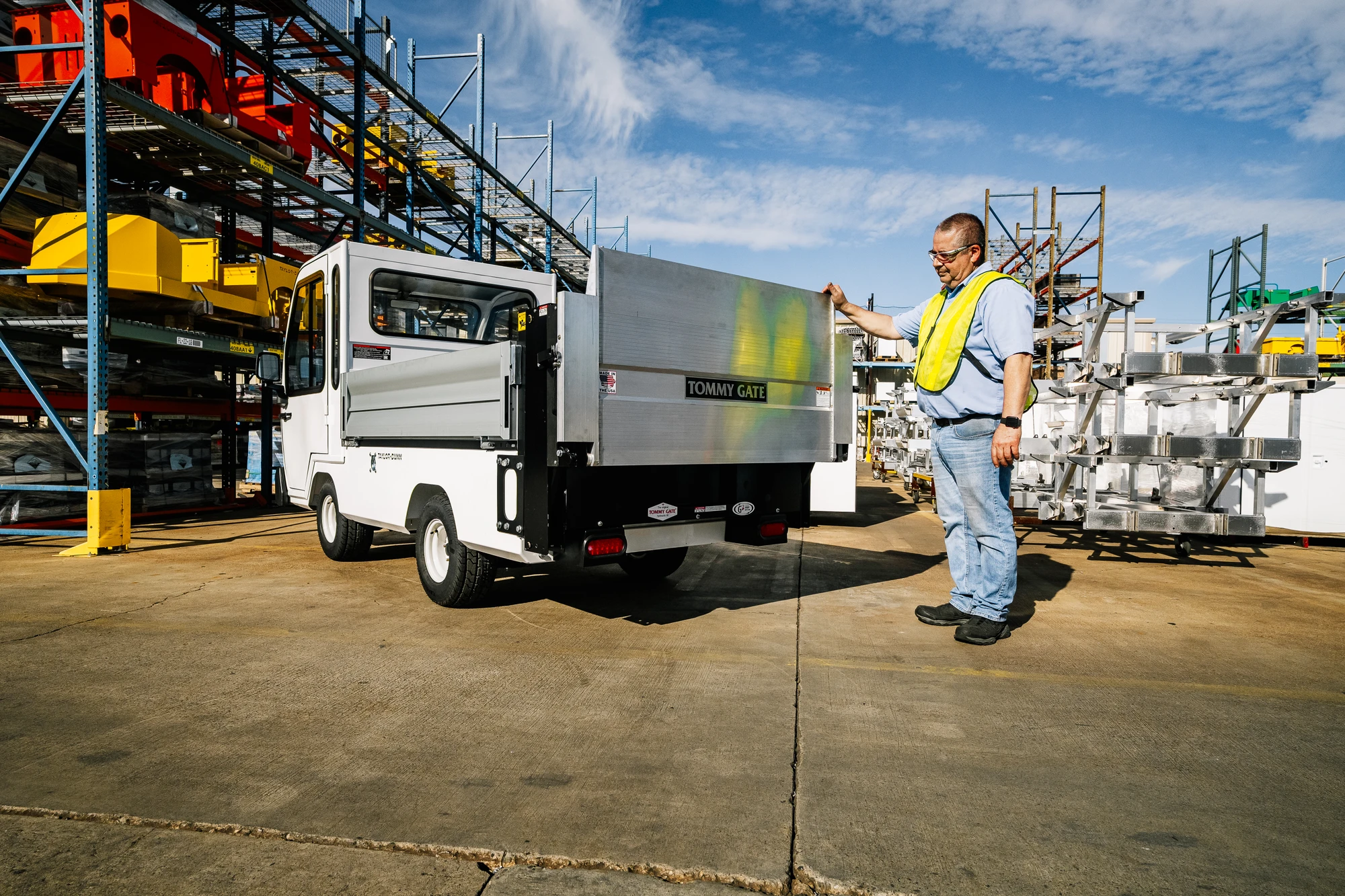
The Bigfoot XL is one of the most trusted electric utility vehicle platforms in the industry. For instance, with 2,500 lb load capacity, it delivers full‑size work‑truck performance in a compact, zero‑tailpipe‑emission footprint that operates indoors, outdoors and across facilities where larger vehicles can’t go.
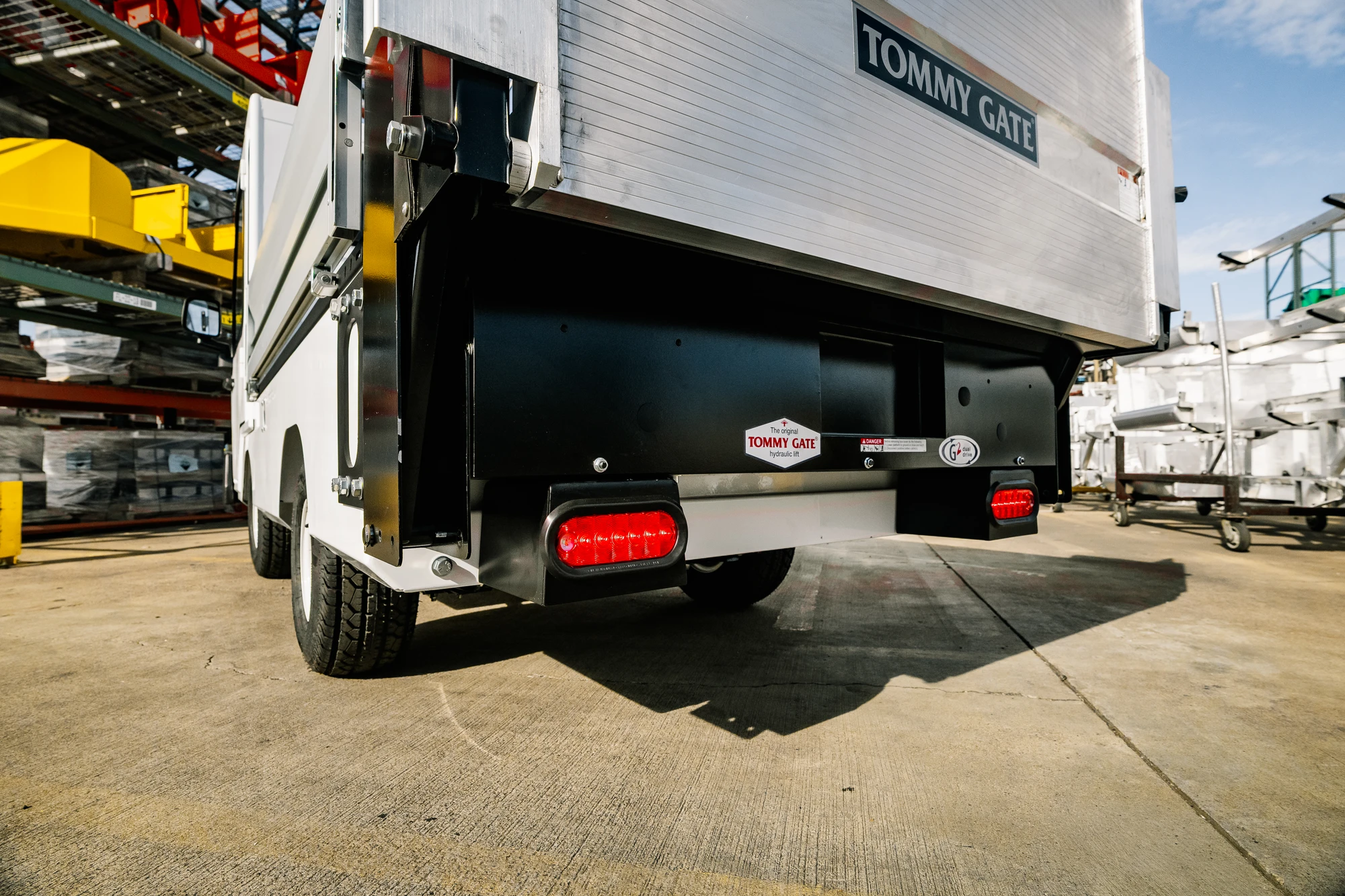
The factory‑integrated Tommy Gate G2 Series is a dual‑cylinder, parallel‑arm hydraulic liftgate providing up to 42 inches of vertical travel and 500 pounds of lift capacity. Dual cylinders apply direct power to both sides of the platform for smooth, balanced operation.
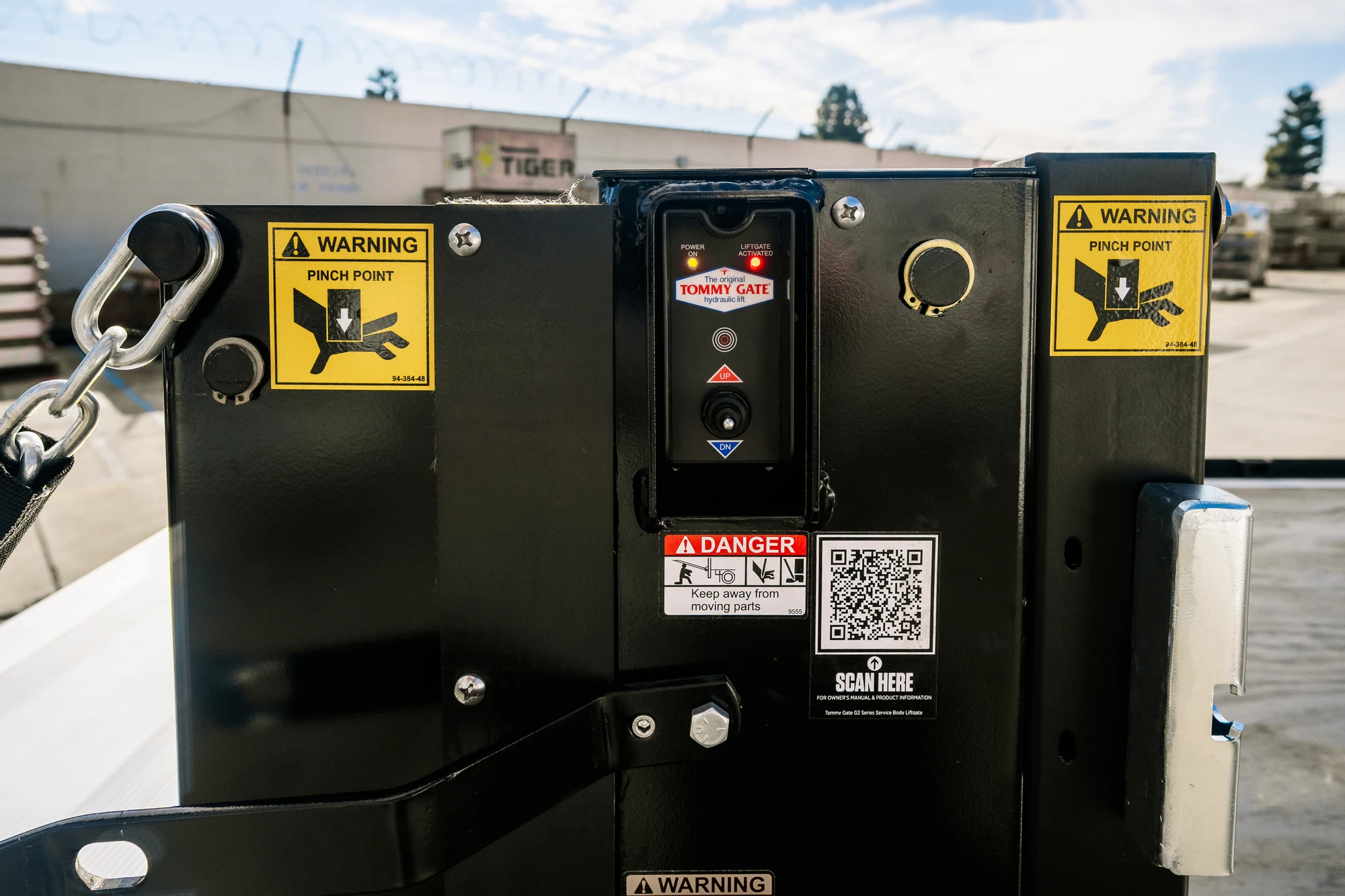
Additionally, a fully enclosed hydraulic system and paint‑before‑assembly process reduce maintenance and extend service life. The recessed toggle control includes automatic 90‑second shutoff, and a 150‑amp circuit breaker protects vehicle electrical systems.
Platform options include treadplate steel, TommyTraction steel, extruded aluminum, bargrate steel.
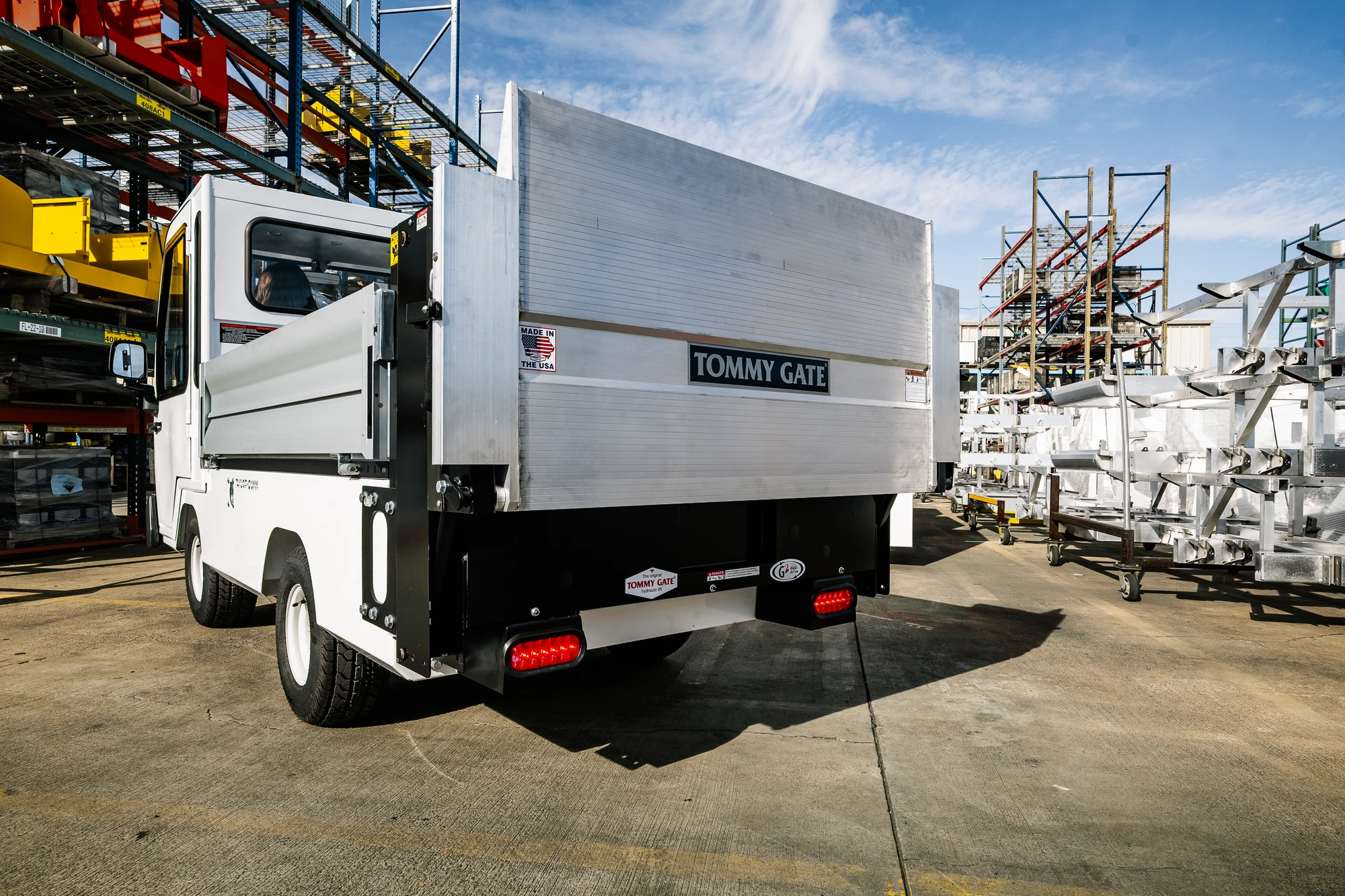
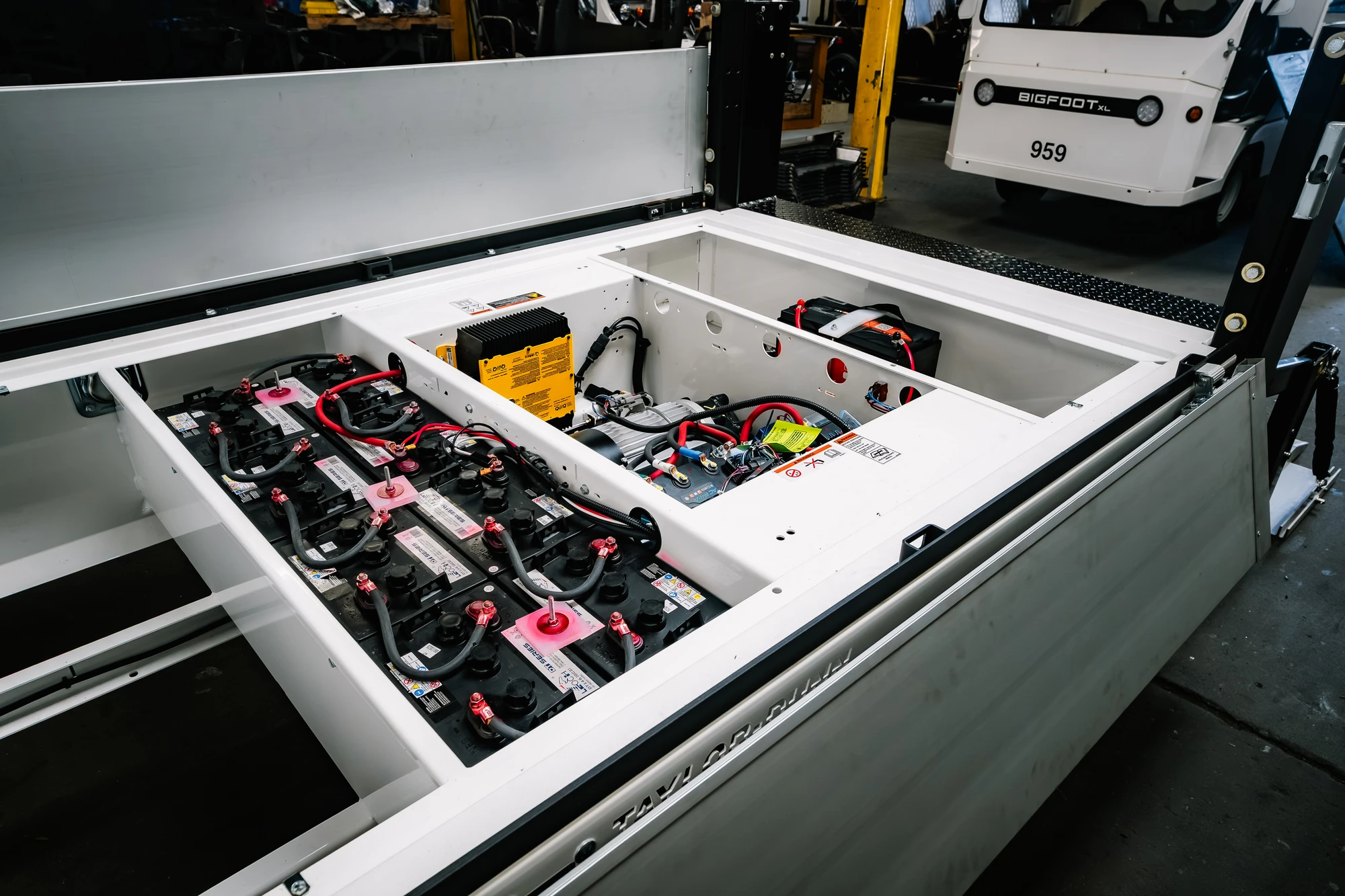
Unlike aftermarket installations, the Bigfoot XL Industrial Liftgate Truck is integrated at three levels:
Electrical: Integrated power system
The liftgate charges with the vehicle. Its lithium‑ion battery connects directly to the main vehicle battery — requiring no separate charging circuit or additional infrastructure.
Mechanical: OEM‑grade mounting
Factory‑engineered mounting maintains tailgate lighting compliance and safety standards. Waev designed every bracket, connection and seal specifically for this vehicle.
Chassis: Purpose‑built frame
A reinforced frame and added ballast ensure stability under liftgate loads. The chassis is engineered for liftgate use from the ground up.
Campuses & Universities
Deliver supplies, equipment and materials across large campus footprints without full‑size truck restrictions.
Municipalities
Ideal for parks, public works and municipal operations requiring low emissions, low maintenance and multi‑use versatility.
Ports & Distribution
High‑volume cargo operations where ground‑to‑deck speed and single‑operator efficiency directly improve throughput.
Industrial Facilities
Warehouses, manufacturing plants and processing facilities with internal transport and staging needs.
The Bigfoot XL Industrial Liftgate Truck is an all-electric industrial utility vehicle manufactured by Waev Inc. under the Taylor-Dunn brand. It pairs the Bigfoot XL electric platform with a factory-integrated Tommy Gate G2 Series hydraulic liftgate to deliver ground-to-deck cargo handling — up to 2,500 pounds of payload and 500 pounds of liftgate capacity.
The Tommy Gate G2 liftgate is factory-integrated with its own lithium-ion battery that connects directly to the vehicle’s main battery. As a result, the liftgate charges whenever the vehicle charges — no separate charging circuit or additional infrastructure is required.
The Bigfoot XL Industrial Liftgate Truck delivers comparable payload (2,500 lbs) to many full-size work trucks, but in a more compact, maneuverable, all-electric platform. In addition, it eliminates fuel costs, oil changes and spark plug maintenance — resulting in significantly lower total operating cost.
Its controlled top speed of 18 mph also makes it safer for facility and campus environments.
Yes. The factory-integrated liftgate is designed for single-operator use, eliminating the need for a second worker during cargo loading and unloading. As a result, this improves workforce efficiency and reduces manual lifting risks.